
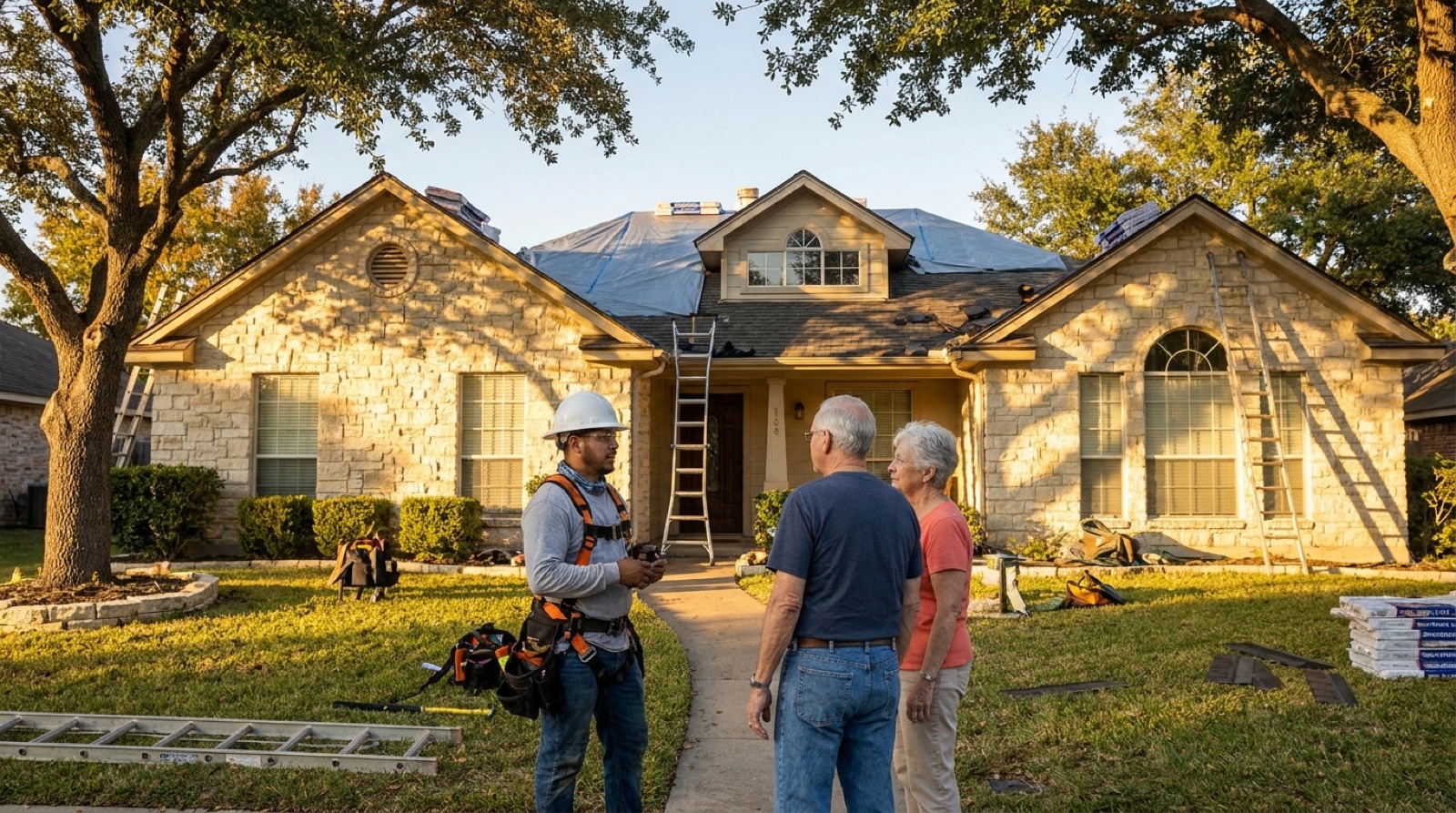
Repair when the damage is isolated, the roof is under 15 years old, and the deck underneath is dry. Replace when the damage spans multiple slopes, the shingles are past 20 years, or you are looking at a third repair on the same roof in five years.
That is the short version. The rest of this guide explains how to apply it to a specific roof in Hutto, because the answer changes depending on what the last hailstorm did and what your insurance adjuster wrote down.
Start With the Age of the Roof
Age is the single strongest predictor. Most three tab and architectural asphalt shingle roofs in Hutto last 15 to 22 years, which is shorter than the manufacturer warranty suggests.
Central Texas heat is the reason. Summer surface temperatures on a dark shingle roof in Williamson County regularly push past 150 degrees, which cooks the asphalt binder and drives off the volatile oils that keep shingles flexible.
A roof under 10 years old is almost always worth repairing. A roof over 20 is almost always worth replacing, even if only one slope is visibly damaged, because the rest is close behind.
The Awkward Middle: 12 to 18 Years
This is where the decision gets real. At this age, look at granule loss in the gutters, shingle edges that curl up at the corners, and whether the shingles crack when you flex them.
If two or more of those are present, repairs buy you time but not much value. A good inspection with photos of the actual decking will settle it faster than any age chart.
Match the Damage to the Fix
| What You See | Likely Answer |
|---|---|
| Handful of missing shingles after wind | Repair |
| Leak around one vent or pipe boot | Repair |
| Hail bruising across 2 or more slopes | Replace |
| Sagging or spongy roof deck | Replace |
| Flashing failure at one chimney | Repair |
| Granules filling gutters every season | Replace soon |
| Daylight visible from the attic | Inspect immediately |
Pipe boots deserve a special note. Rubber boots crack from UV exposure long before the shingles fail, and they cause a large share of the leaks we handle in Hutto and Round Rock.
Replacing a cracked boot is a straightforward repair visit, not a reason to tear off a functional roof. Any contractor who quotes a full replacement for a single leaking boot is selling, not diagnosing.
The Hail Question
Hutto sits in an active hail corridor. Storms rolling through Williamson County drop stones that bruise shingles without breaking them, and that bruising is the part homeowners miss.
A bruise is a soft spot where the impact fractured the mat and knocked granules loose. It does not leak today. It leaks in two or three years once the exposed asphalt weathers through.
Insurance carriers generally approve a full replacement when an adjuster counts enough hits per test square. That threshold, not your own judgment, often decides the outcome, which is why documentation from a contractor who inspects for hail damage before the adjuster arrives matters so much.
Deadlines You Should Know
- Most Texas policies require a claim within one year of the date of loss
- Some carriers have shortened that window, so check your declarations page
- Damage from a storm three years ago is usually your expense, not theirs
If a storm just came through and water is entering the house, that is a different conversation. Get temporary protection on the roof first and sort out the long term decision once the interior is dry.
Run the Math, Not the Emotion
A useful rule: if the repair costs more than 30 percent of a replacement and the roof is past its halfway point in age, replace it.
Consider a 16 year old Hutto roof with a $2,800 repair quote against a $14,500 replacement. That repair is 19 percent of replacement cost but only buys about five more years, which works out to worse value per year than the new roof.
Also count the repairs you have already paid for. Three separate visits at $600 each over four years is $1,800 spent on a roof that still has every original problem.
When Replacement Is the Only Honest Answer
Some conditions leave no room for debate. Rotted decking, widespread nail pops, multiple layers of old shingles, or storm damage across most of the roof all point one direction.
Deck rot is the important one. Once moisture has been sitting in the plywood, patching over it traps the problem, and a full tear off is the only way to see what you actually have.
If you are replacing anyway, that is the moment to reconsider materials. Most Hutto homes go back with architectural asphalt shingles for cost reasons, but a standing seam metal system handles Texas heat and hail better and lasts two to three times as long.
How to Avoid the Question Next Time
Roofs rarely fail all at once. They fail at the details: boots, flashing, valleys, and sealant that dried out three summers ago.
Twice yearly checks catch those before they turn into decking repairs. Homeowners on a regular maintenance schedule typically get three to five extra years out of the same roof, which is real money on a $15,000 asset.
Not sure which side of the line your roof falls on? Get in touch for a straight assessment and we will give you photos, a clear recommendation, and a written quote for whichever direction the evidence points.