
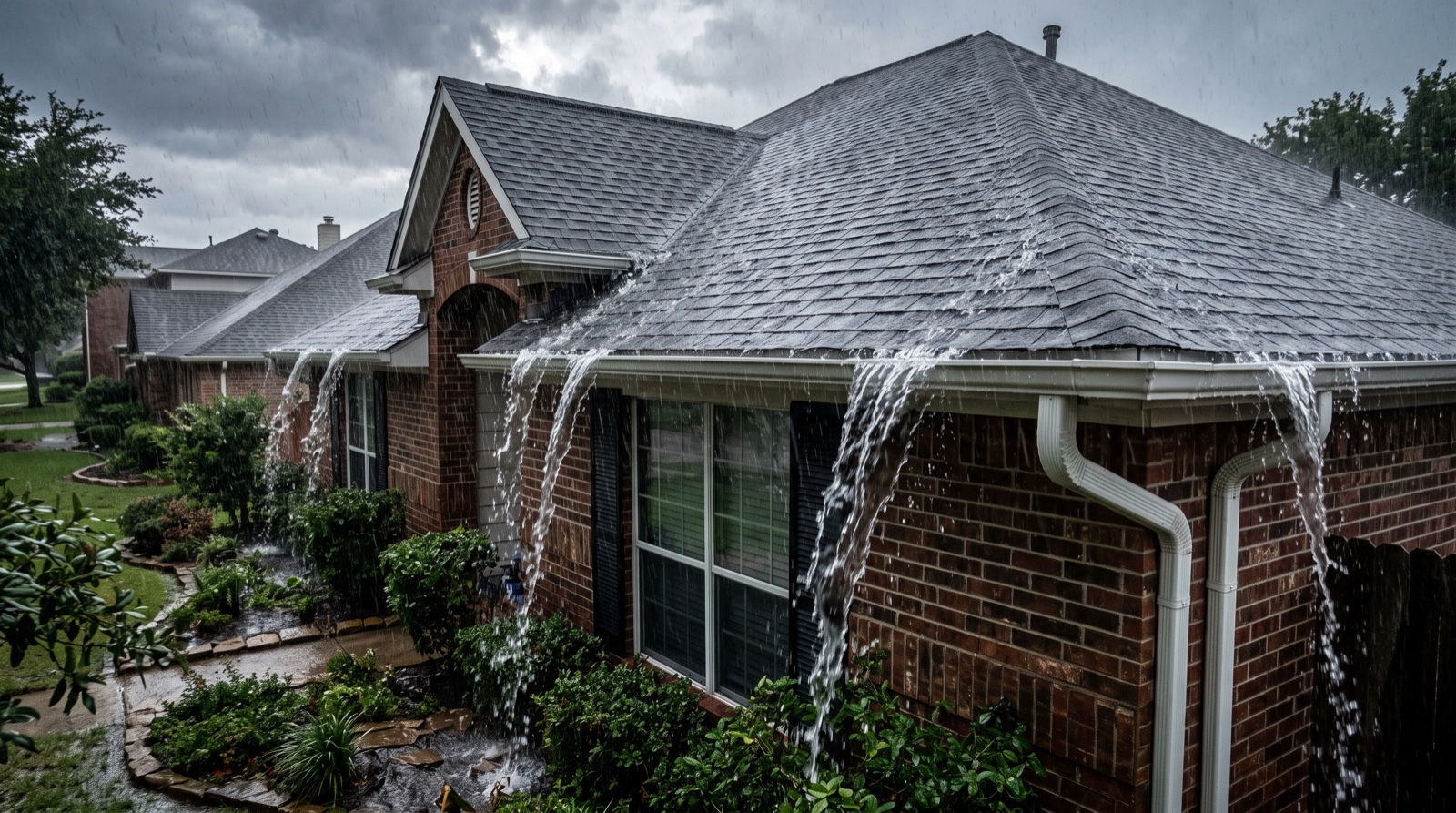
If your roof has a weak point, several days of steady rain will find it. The week after a long rain event is the best time to check, because stains and damp insulation are still visible.
On September 28, Governor Abbott held a severe weather briefing at the State Emergency Operations Center and directed the state to activate additional emergency resources. According to the Office of the Texas Governor, more than 1,900 state responders and over 1,500 pieces of equipment were made available ahead of excessive rainfall and flash flooding threats.
The release tied the threat to tropical moisture from Hurricane Polo combining with an approaching low pressure system, with impacts expected across the majority of the state by midweek. FOX 7 Austin reported that the forecast included the I-35 corridor through Central Texas, with winds up to 60 miles per hour possible.
Hutto sits just east of that corridor. Whatever your own street received, the checks below apply after any multi-day rain in Williamson County.
Why Long Rain Is Different From a Quick Storm
A fast thunderstorm sheds off a roof in minutes. Prolonged rain keeps every seam, valley, and flashing joint wet for days, so slow leaks that never show up in a short shower finally reach the ceiling.
Wind makes it worse. Gusts push water sideways and uphill under shingle edges, around vents, and behind siding where gravity alone would never carry it.
Where Hutto Roofs Usually Let Water In
Most leaks we trace after extended rain do not start in the open field of shingles. They start where the roof is interrupted or where water concentrates.
| Location | What goes wrong | What you will notice |
|---|---|---|
| Pipe boots and vents | Rubber collar cracks from sun exposure | Round stain near a bathroom or kitchen |
| Valleys | Debris slows flow and water backs up | Stain running along a ceiling line |
| Wall and chimney flashing | Sealant fails or flashing lifts | Damp drywall where roof meets wall |
| Gutters and fascia | Overflow soaks the roof edge | Peeling paint, soft fascia boards |
| Low slope sections | Water ponds instead of draining | Leak that appears a day after rain |
A 15 Minute Check You Can Do From the Ground
You do not need to climb on the roof, and you should not while surfaces are wet. Work through this list instead.
- Walk every ceiling. Look for yellow or brown rings, bubbled paint, and sagging drywall, especially in closets and garages that rarely get looked at.
- Check the attic with a flashlight. Dark streaks on the decking, matted insulation, and a musty smell all point to water entry.
- Look at the roof from the yard. Note any lifted, creased, or missing shingles and any flashing that looks bent or out of place.
- Inspect gutters and downspouts. Piles of shingle granules at the downspout outlet mean the surface is wearing faster than it should.
- Walk the perimeter. Washed out soil under the eaves tells you the gutters overflowed.
Take dated photos of anything you find. They are useful for a repair estimate and for your insurer if the damage turns out to be storm related.
Gutters Matter More Than Most Owners Think
Hutto is built on expansive clay soil that swells when saturated. Water dumped at the foundation line by an overflowing or undersized gutter is a problem for more than the roof.
If water sheeted over the front edge during heavy rain, the system is either clogged, pitched wrong, or too small for the roof area. A properly sized gutter system with correctly placed downspouts moves that water away from both the fascia and the slab.
When to Call and What to Ask For
Not every finding needs the same response. Use this as a rough guide.
- Active dripping or a sagging ceiling: this is urgent, and same day tarping and leak control limits the interior damage.
- A new stain that is dry now: the leak is still there and will return, so schedule a targeted repair before the next front.
- Missing or creased shingles after wind: ask for a storm damage assessment with photo documentation.
- Nothing visible but the roof is over 12 years old: book a professional inspection so small flashing and sealant failures are caught early.
Ask any contractor to show you photos of the exact entry point, not only the stain. A repair that addresses the ceiling without finding the source will fail in the next long rain.
Do Not Wait for the Stain to Dry Out
Wet decking and insulation do not fix themselves in the Texas humidity. Trapped moisture leads to mold, rotted sheathing, and a much larger repair bill than the original leak would have cost.
October is also a practical window for roof work in Hutto. Temperatures are easier on crews and on sealants than in August, and schedules are usually more open than they are after spring hail.
If the recent rain left you with a stain, a drip, or just a question, get in touch with Roofing Hutto for a quote or call (512) 555-0150. We serve Hutto, Round Rock, Pflugerville, Taylor, Georgetown, and the rest of Williamson County.